
We Can't Grow Alone
We found ourselves ...in M. Scott Peck's Four Stages of Spiritual Development


Most of us want to grow spiritually. But many of us are stuck. Some of us live our whole lives thinking everything is fine until everything falls apart. We lose faith. We lose hope. We lose ourselves.
Faith can’t be linear because life isn’t.
Joey came into Episode 21 wanting to talk about the late M. Scott Peck’s framework for spiritual development, a four-stage rubric that proposes people (should) move from chaos (a time of impulse, without any moral framework) to order (rules, tradition, and institutions) to deconstruction (questioning everything) and finally mystery (comfort with not knowing). According to Peck, the first stage is infancy and childhood.
The late psychiatrist believed that, as we grow up, most of us reach stage two. But Peck contended that four out of five people never move past stage two.
Haroon wanted to know if that could possibly be true.
Did M. Scott Peck Never Meet Teenagers?
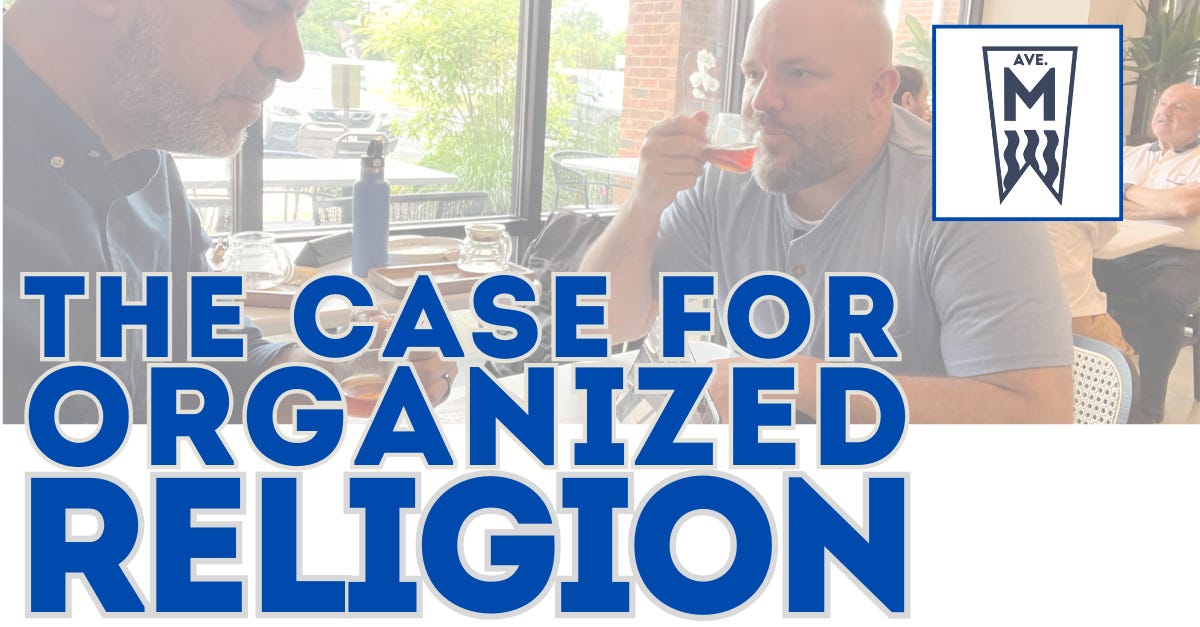
We both left stage two, the age of order and rules, and arrived at the third stage, deconstruction, at about the same time: Our late teens. That tracks, too. We don’t seem to grow up until we find out that what we think about the world, our faith, and even ourselves, isn't necessarily true. That’s when many people start to test boundaries, or fall apart, or act out, or quietly seethe. Or maybe just quiet the questions, finding it’s easier to go along, pretending it’s all fine.
But Peck believed this is where the real journey actually began, not with learning the rules, or abandoning the rules, but with growing from deconstruction to something beyond this—developing a deeper, humbler kind of connectedness.
In this week’s episode, we ask whether Peck was right—by applying Peck to our lives and experiences. We ask what it means to grow spiritually, reflecting on what we lacked at key points in our lives. In Haroon’s case, that’d be a mentor, who could’ve helped him deconstruct — and reconstruct, when he needed that most. Because most of us fall apart. Who’s there, though, to put us together again? Then Joey dropped the mic (well, figuratively), delivering the counterintuitive truth behind any real spiritual growth: We can’t grow alone.
We can’t mature, religiously, without other people. We need to deconstruct ourselves (which is far preferable to just destructing ourselves.) But then we need to reconstruct ourselves. That’s where the tension comes in, the part that makes no sense and that’s also, with the benefit of hindsight, absolute common-sense. The very people whose differences from us provoke our deconstruction are often the very same people we need if we have any hope of reconstruction.
What does that mean in practice?
And what about that mysterious fourth stage? You can watch the full episode on our YouTube channel (and below) and find out.
As always, you can also listen on Apple Podcasts and Spotify.
Peckish in a Time of Plenty: The Show Notes
Morgan Scott Peck was trained and practiced as a secular psychiatrist until enough confrontations with what he came to believe was actual evil deconstructed him. When his secular, material, scientistic frameworks proved incapable of accommodating what he later concluded was the genuinely Satanic, Peck evolved in the direction of religion and specifically Christianity.
In books like People of the Lie: The Hope for Healing Human Evil and Different Drum: Community Making and Peace, Peck shares his journey and the conclusions he drew from it. That’s our jumping off point; of course, we recommend reading books for yourself. There’s a bit of pop culture at the start of the episode too, which, as Haroon insists, is really and truly on purpose. Listen and you’ll find out why.
We made reference to Christopher Nolan’s Dark Knight trilogy, which began with 2005’s Batman Begins and ended with the 2012 The Dark Knight Rises.
The third installment in the film adaptation of Frank Herbert’s Dune saga, Dune: Part Three, releases on December 18, 2026, the very same day as the new Avengers film, Doomsday.
That day is now called Dunesday, not to be confused with the Dúnedain, which is Tolkien’s legendarium. That’s another take on spiritual development altogether.
The swordmaster Duncan Idaho loyally served House Atreides.
Avenue M is a podcast about the hard work of living inside a religion. Belonging is one thing. Becoming is the real thing. New episodes every week. Subscribe now for conversations about faith, tradition, citizenship, and the questions that won’t leave us alone.